


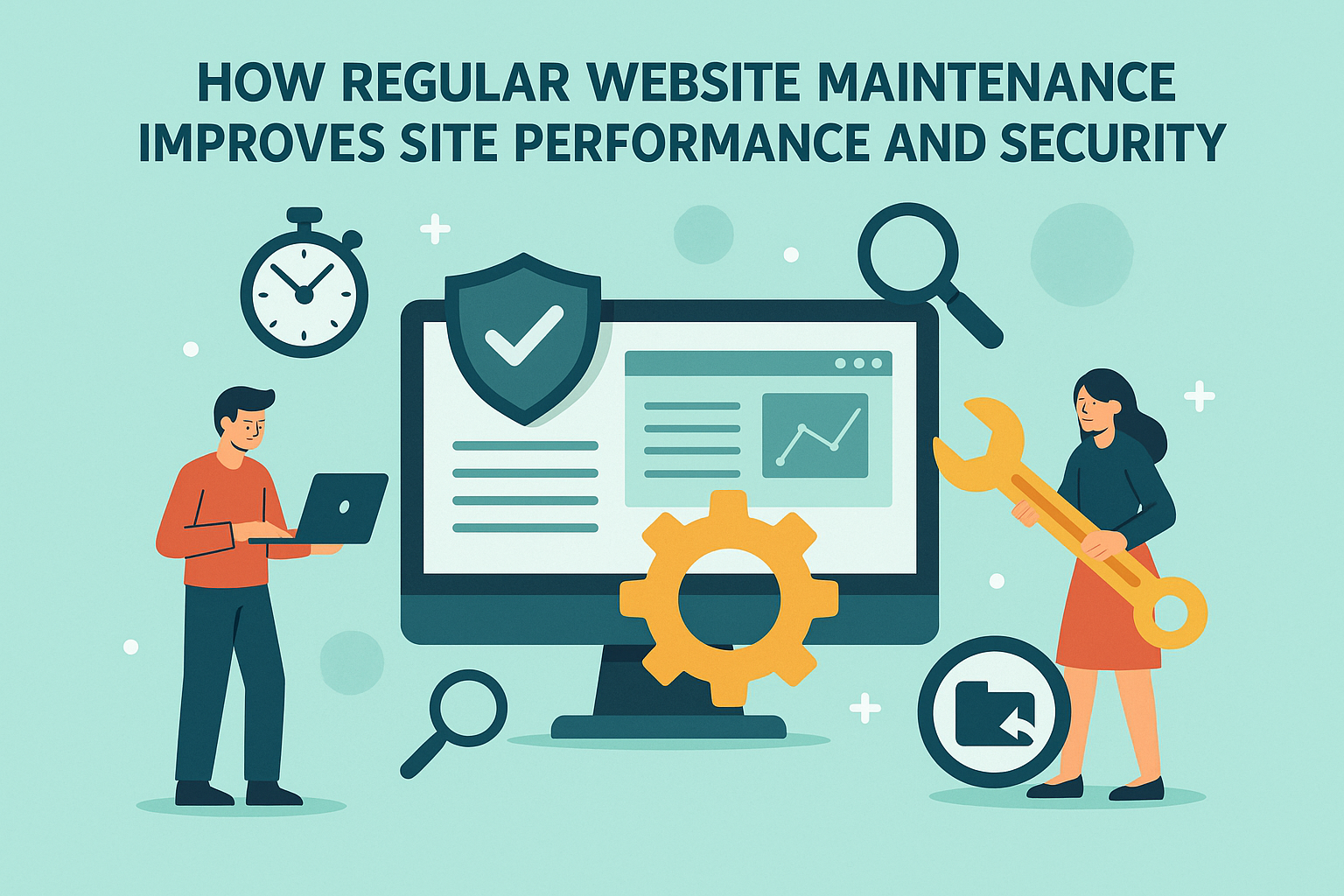
How Regular Website Maintenance Improves Site Performance and Security

How Regular Software Updates Keep Your Website Secure and Running Smoothly
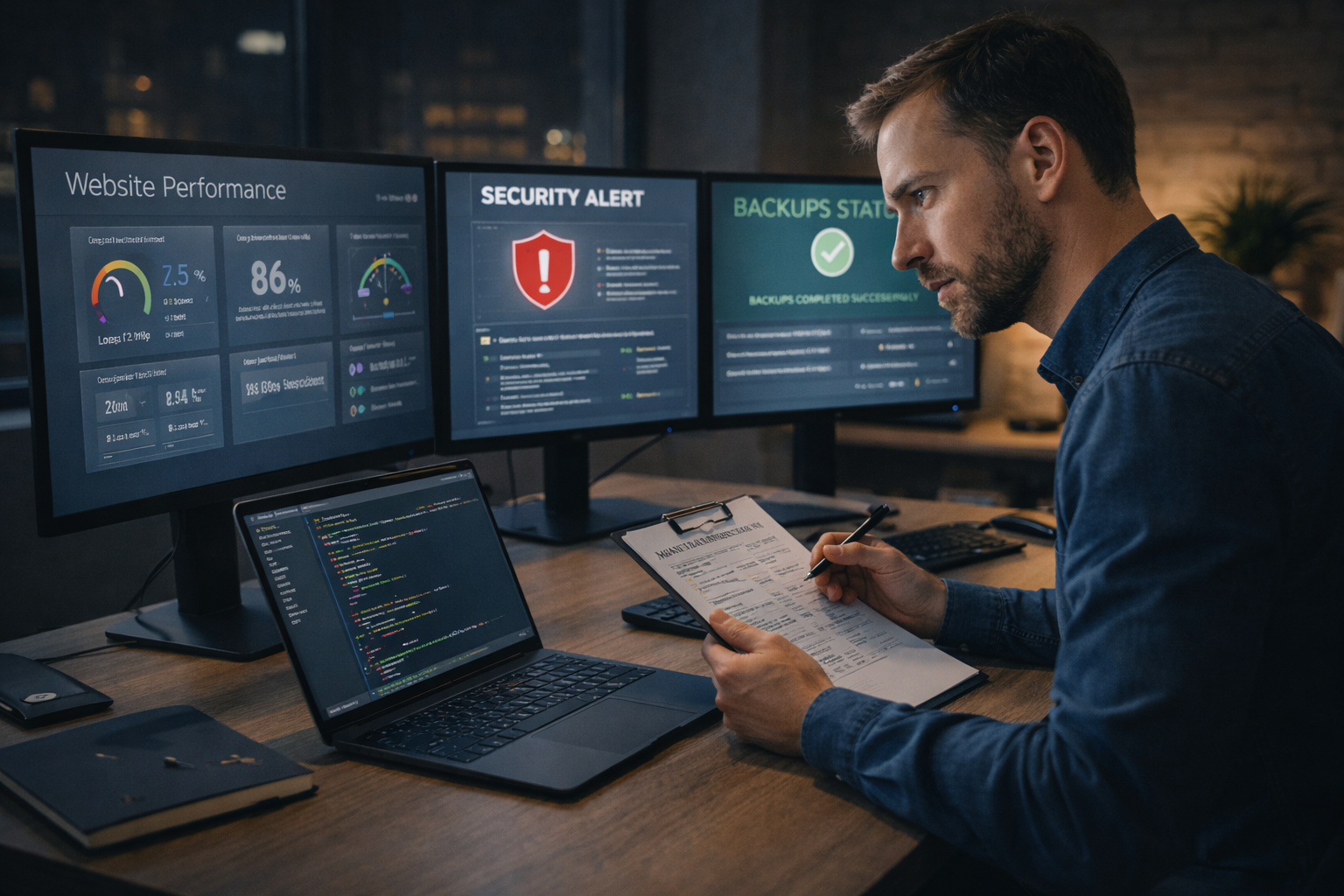
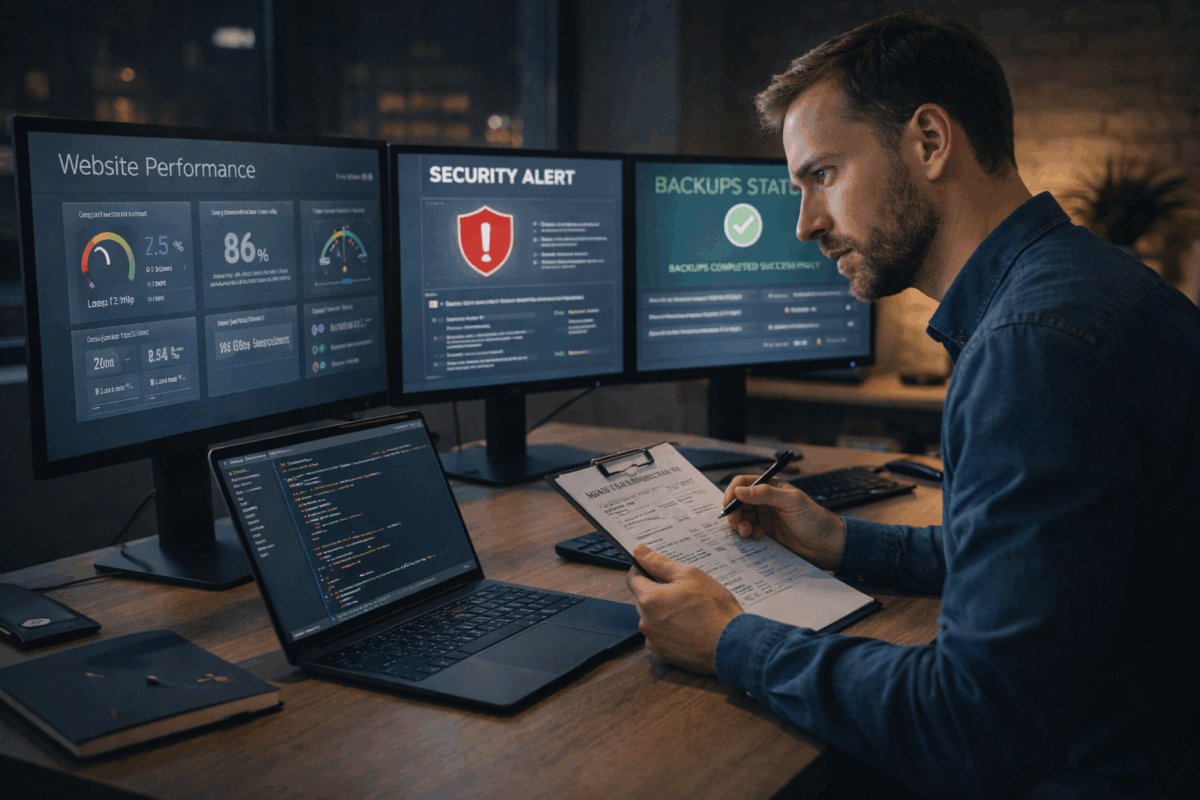
Maintaining a website goes beyond updating content—it requires ongoing server maintenance to ensure optimal performance, security, and uptime. In 2025, businesses cannot afford downtime or slow-loading websites, as this directly impacts user experience, conversions, and brand reputation. Regular server maintenance keeps your website running smoothly and prevents unexpected failures.
Why server maintenance is crucial
Servers host your website and handle all incoming requests. Without proper upkeep, issues like server crashes, slow response times, or security vulnerabilities can arise. Regular maintenance ensures that your hardware and software are up-to-date, secure, and optimized for the traffic your website receives.
Key server maintenance tasks
- Update server software: Keep your operating system, web server (Apache, Nginx), and database software up-to-date to patch security vulnerabilities.
- Monitor server performance: Track CPU, memory, and disk usage to detect bottlenecks or unusual spikes.
- Backup server data: Schedule regular backups and verify restore processes to prevent data loss.
- Security scans: Conduct regular scans for malware, unauthorized access, and other threats.
- Log monitoring: Analyze server logs to detect errors, failed logins, or unusual activity patterns.
Best practices for server maintenance
- Implement automation for updates, backups, and monitoring alerts.
- Use strong passwords and multi-factor authentication for server access.
- Set up firewalls and intrusion detection systems to protect against cyberattacks.
- Regularly test website load times and optimize database queries for performance.
- Keep a detailed maintenance schedule and documentation for all activities.
Benefits of proactive server maintenance
Proactive maintenance reduces the risk of unexpected downtime, improves website speed, enhances security, and ensures a better user experience. Businesses that invest in regular server upkeep save time, reduce costs from emergency fixes, and build trust with their audience by providing reliable service.
Conclusion
Server maintenance is a critical part of website management. By consistently monitoring performance, applying updates, securing the system, and backing up data, businesses can ensure their website remains fast, secure, and reliable. In 2025, proactive server care is essential to sustaining digital operations and delivering a seamless user experience.